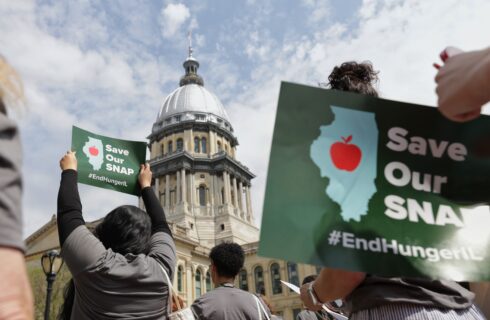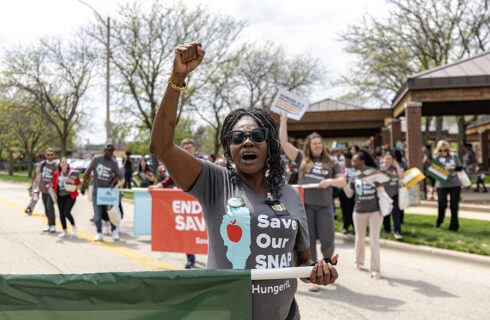



The Greater Chicago Food Depository welcomes the news that the Senate Agriculture Committee did not advance a Farm Bill proposal that would have weakened critical food assistance for families and essential support for farmers.
The Farm Bill shapes much of America's food and nutrition policy, supporting farmers while also authorizing lifesaving anti-hunger programs like the Supplemental Nutrition Assistance Program (SNAP). Moving forward, we urge federal lawmakers to use this moment to craft a bipartisan bill that protects SNAP, supports farmers, and helps ensure every family has enough to eat.
The current proposal fails to reverse the harmful cuts to SNAP in the budget reconciliation law, H.R. 1, passed last July. These cuts are already contributing to historic declines in SNAP enrollment and increased hunger in our area and across the country. According to the Center on Budget and Policy Priorities, SNAP participation nationwide fell by more than 4.5 million people (11 percent) since the law’s enactment in July 2025 while SNAP participation in Illinois fell by around 20 percent (approximately 370, 000 people) since July 2025, representing the lowest number of SNAP participants since 2009.
The current Farm Bill proposal fails to provide adequate relief to states now facing hundreds of millions of dollars in additional costs to preserve SNAP for its most vulnerable residents. In Illinois, the state would need to secure as much as $550 million a year beginning in October 2028, to keep SNAP intact – a program that has historically been 100 percent federally funded. States need more time to lower their “payment error rates” – the metric used to determine how much a state will need to shoulder. This rate measures a state’s SNAP overpayments and underpayments.
If the federal government does not change this misguided and unprecedented move to shift costs to individual states, it will put SNAP at risk for all 1.6 million households in Illinois who rely on it. We continue to call for the full reversal of all of HR 1's historic cuts to food and healthcare programs. At a minimum, the next Farm Bill, or any other legislative vehicle containing farmer relief, should make meaningful steps in that direction by containing a two-year delay of the SNAP benefits cost shift without unnecessary offsets or additional cuts to SNAP.
We look forward to working with federal lawmakers to support Illinois farmers and the increasing number of Illinois families now facing hunger.
Share This Post