


2026 Hunger in Chicago Report finds food insecurity worsening as families make tradeoffs between food, rent and other essentials.
Food insecurity in Chicago is widespread and worsening, according to the 2026 Hunger in Chicago Report released today by the Greater Chicago Food Depository in partnership with NORC at the University of Chicago. Based on a June survey of 1,200 Chicago residents, the report finds that 36% of Chicago households — about 417,000 households — lack consistent access to enough food. And nearly 1 in 2 Chicago households with children (47%) are struggling to put food on the table.
The findings show that cost of living is outpacing people’s ability to make ends meet. Rising costs and historic cuts to critical safety net programs like the Supplemental Nutrition Assistance Program (SNAP) are forcing hundreds of thousands of neighbors to choose between groceries and essentials such as housing, utilities and medicine.
“This report makes clear what we hear every day from neighbors and community partners: hunger is happening right now, in every part of our city, driven by unaffordability and a shrinking federal safety net,” said Kate Maehr, executive director and CEO of the Greater Chicago Food Depository. “It underscores the lived experience behind the data: parents are skipping meals so their children can eat, older adults are stretching fixed incomes as rent and grocery bills rise, working families are doing everything they can and still coming up short.”
Key findings:
- More than one in three Chicago households are food insecure. As of June 2026, 36% of Chicago households — approximately 417,000 households — reported not having consistent access to enough food.
- Families with children are at even greater risk. Nearly half of Chicago households with children, 47%, are struggling to put food on the table, compared with 30% of households without children.
- Hunger is citywide, but inequities remain stark. Food insecurity reaches 51% on the South Side, 45% on the West Side and 41% on the Southwest Side, compared with 20% on the North Side.
- Unaffordability is driving the crisis. Forty percent of Cook County households cannot afford the basic cost of living. Since 2021, food prices have increased 22% and rent prices have risen 31% in the Chicago metro area.
- Neighbors are being forced into painful tradeoffs. Thirty-one percent of Chicagoans reported delaying, reducing or skipping payments for other basic needs, including utilities or medicine, so they could pay for food.
- Food insecurity is not a reflection of effort. More than half of adults in food-insecure households are employed, while others are unable to work because of age, disability or retirement.
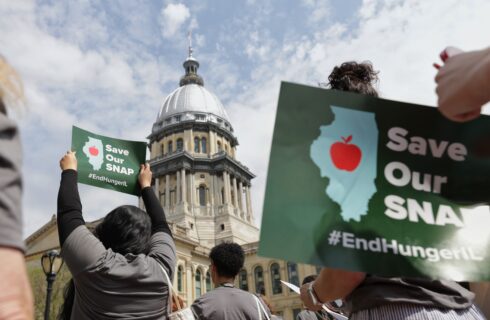
- A shrinking safety net is making hardship worse. Since July 2025, SNAP enrollment in Cook County has decreased by 23%, leaving nearly 196,000 fewer neighbors connected to the nation’s most important anti-hunger program.
The data shows hunger is not limited to people who are unemployed or disconnected from support. Many neighbors experiencing food insecurity are working, raising children, caring for family members or living on fixed incomes — yet still cannot keep up with food, rent, health care and other necessities.
The Greater Chicago Food Depository and its network of community partners are responding by ensuring emergency food access, connecting neighbors to safety net programs and advocating for policies that address the root causes of hunger. In its last fiscal year, the Food Depository delivered 119 million pounds of food — the equivalent of 99.3 million meals — at no cost to partner pantries. The network supported more than 2.26 million household visits, serving approximately 190,000 household visits each month.
“The charitable food system is responding with everything we have, but food banks alone cannot solve an affordability crisis of this scale,” Maehr said. “We need urgent action to strengthen SNAP, protect health care and invest in solutions that help families afford the basics.”
The Food Depository continues to call for the full reversal of historic cuts to food and health care programs that help keep families from falling into hunger and hardship. At a minimum, federal leaders should delay the SNAP cost shift to states for two years so states have time to secure the funding needed to keep basic food assistance available.
Share This Post