

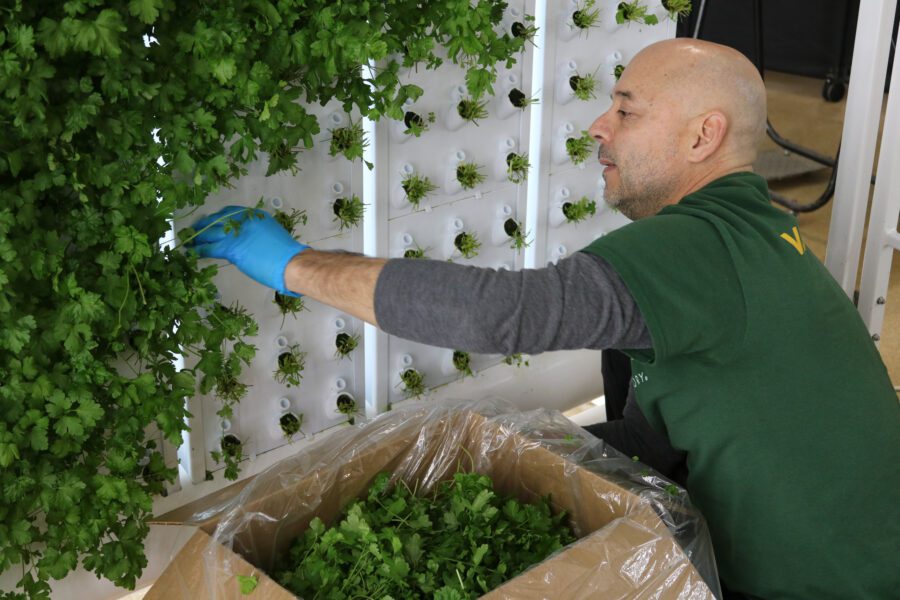
At the Greater Chicago Food Depository, the mission to end hunger takes many forms. Trucks deliver food to hundreds of partner sites across Cook County. Volunteers pack thousands of pounds of produce every week. And in a dedicated space inside the building, rows of herbs grow in vertical hydroponic units under steady light.
These units comprise the Food Depository’s hydroponics pilot program – an innovative approach that uses sustainable methods to supply fresh ingredients for meals served to neighbors across Chicago.
Innovative growing methods
The program was developed as part of the Food Depository’s effort to explore creative solutions to alleviating hunger. Hydroponics offers several advantages over traditional farming. By controlling variables like light, nutrient levels and water flow, we can optimize growth and ensure strong yields year-round.
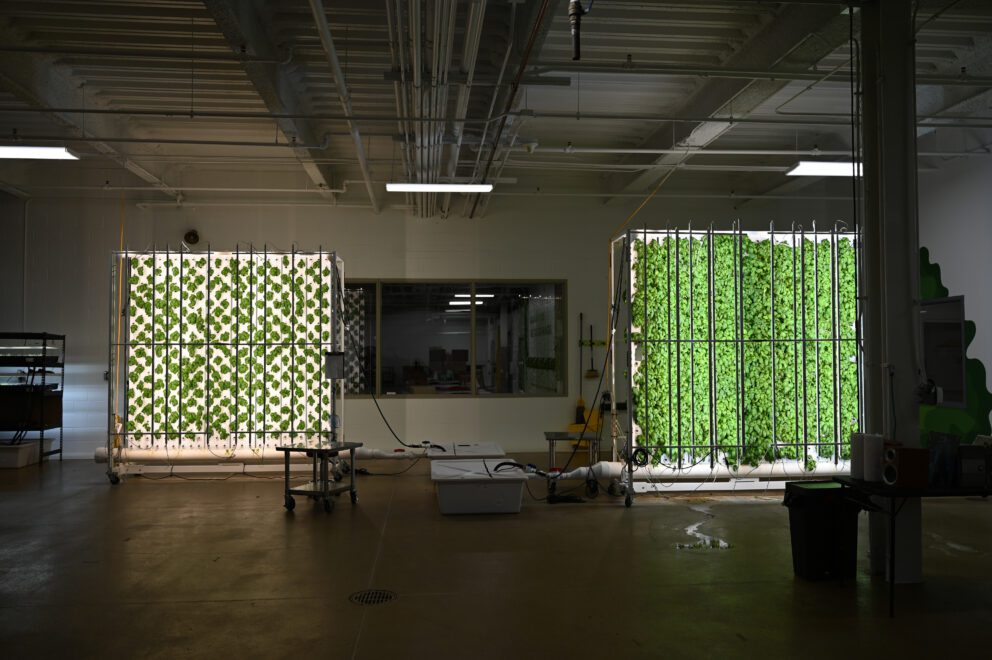
Two hydroponic units at the Food Depository grow fresh herbs year-round, providing basil and parsley for scratch-made meals.
Each plant starts as a seedling in our nursery before being transplanted into growing units. These units provide a consistent flow of nutrient-rich water and 18 hours of light per day. Herbs such as basil and parsley are often ready to be harvested in about 45 days from seeding, and many varieties can be harvested multiple times. Each growing unit can sustain 1,056 crops at once, maximizing production in a small space. The Food Depository grows basil, sage, chives, dill and parsley between three units.
Mick O’Donnell, the Food Depository’s senior hydroponics and donated food specialist, says the program combines innovation with community impact.
“Hydroponics lets us grow year-round in an urban environment,” he said. “The herbs we produce help to elevate the taste and nutrition of our prepared meals.”
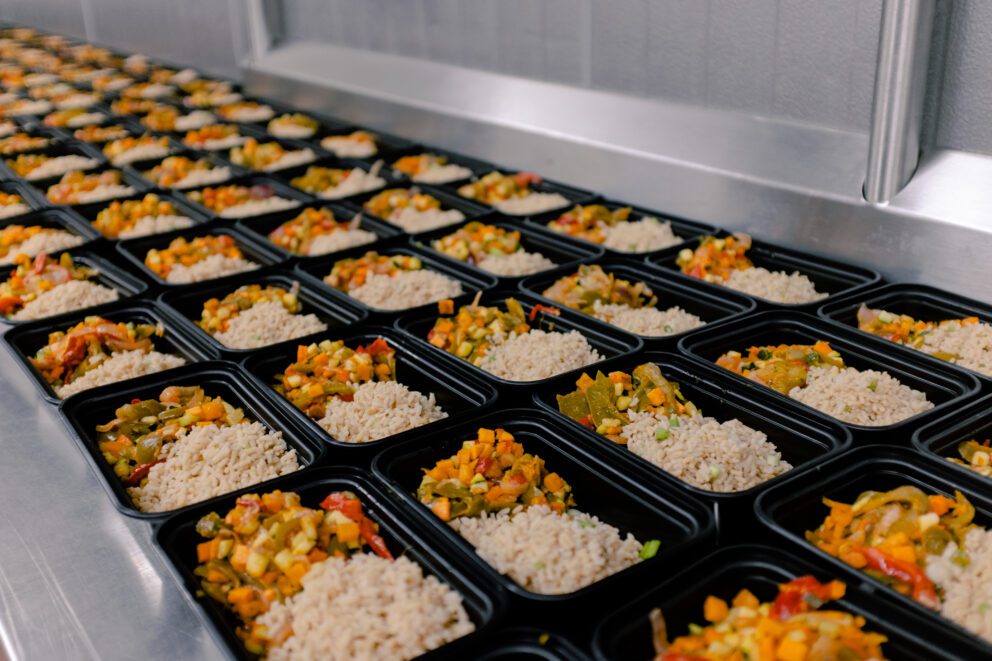
Prepared meals cooked with herbs from the hydroponics units in production, getting ready to be delivered to neighbors.
Once harvested, the herbs are sent down the hall to the Food Depository’s kitchen, where our team prepares thousands of nutritious, scratch-made meals each week. These meals support neighbors across Chicago and Cook County experiencing food insecurity, including neighbors who experience challenges in cooking for themselves, and low-income older adults served through healthcare partnerships.
By using herbs grown in-house, the kitchen team can boost both flavor and nutrition in dishes like the Cajun chicken with brown rice and seasonal vegetables as well as the chili lime fish with yellow rice and vegetables, which are distributed through partner pantries, community organizations and direct delivery programs.

A pantry guests receives a prepared meal at St. Moses the Black pantry.
The impact of volunteers
Volunteers are the heart of the hydroponics program, planting, tending and harvesting the crops that make their way into meals for our neighbors.
David Flores, a retired firefighter and veteran, began volunteering with the Food Depository shortly after retiring two years ago. In addition to helping at repacks – where volunteers sort and package bulk food for distribution – and serving as a volunteer ambassador, he now spends much of his time in the hydroponics space. Twice a week, Flores tends to basil and parsley crops.
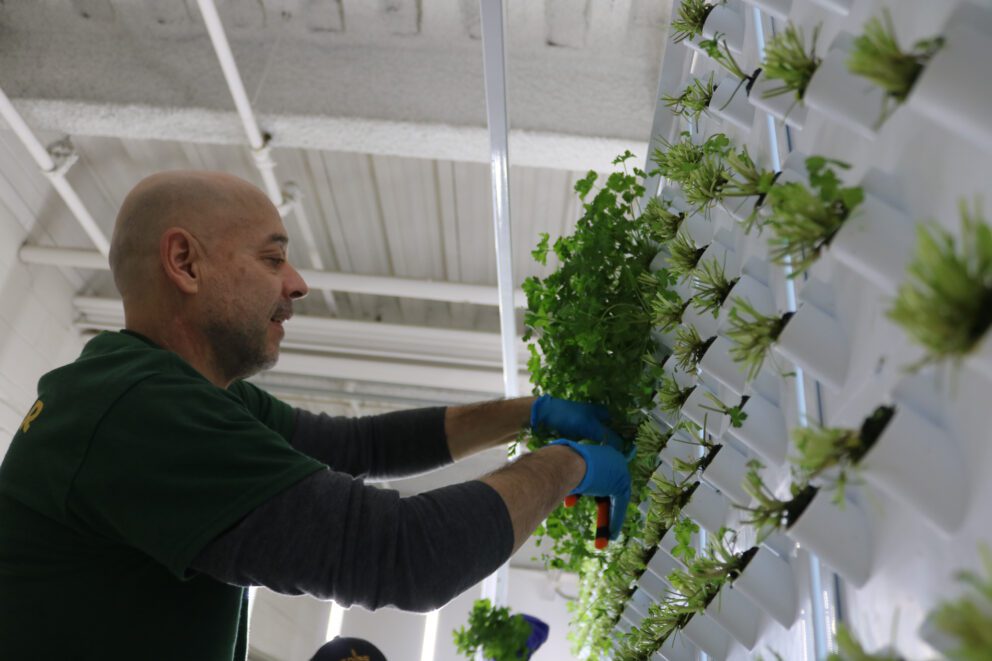
Volunteer David Flores harvests fresh parsley from the Food Depository’s hydroponic unit.
“I never thought I’d be an urban farmer,” Flores said. “But I love it. I’ve learned so much, and I know the produce is going out to the community.”
On Tuesday and Thursday mornings, Flores waters seedlings, transplants herbs and assists with harvests. “I feel like I’m still learning every day,” he said. “Hydroponics wasn’t something I ever thought I’d be doing, but now I see how the herbs go straight into meals that reach our neighbors, and I know I played a part in that.”
Susan Barton, a lifelong gardener and sustainability advocate, also volunteers with the program. After retiring in 2020 from the Shedd Aquarium, where she spent 25 years in horticulture and facilities, she sought new ways to put her skills to use.
“I’ve always loved to garden, and I’ve always believed that everyone deserves access to good food,” Barton said. “It feels good to know I’m helping grow it.”
For Barton, sustainability also extends beyond the environment. Standing among the rows of herbs in the Food Depository’s hydroponics area, she reflected on the program’s impact. “This program shows that you don’t need acres of land to grow something meaningful,” she said. “We can do it right here, and it can feed our neighbors.”
Looking ahead
As the pilot grows, the Food Depository sees potential for expansion. “We’re learning what works best in this system, and we’re exploring how it could grow in scale,” said O’Donnell. “The more we can integrate fresh, locally grown produce into our meals, the stronger and healthier the community becomes.”
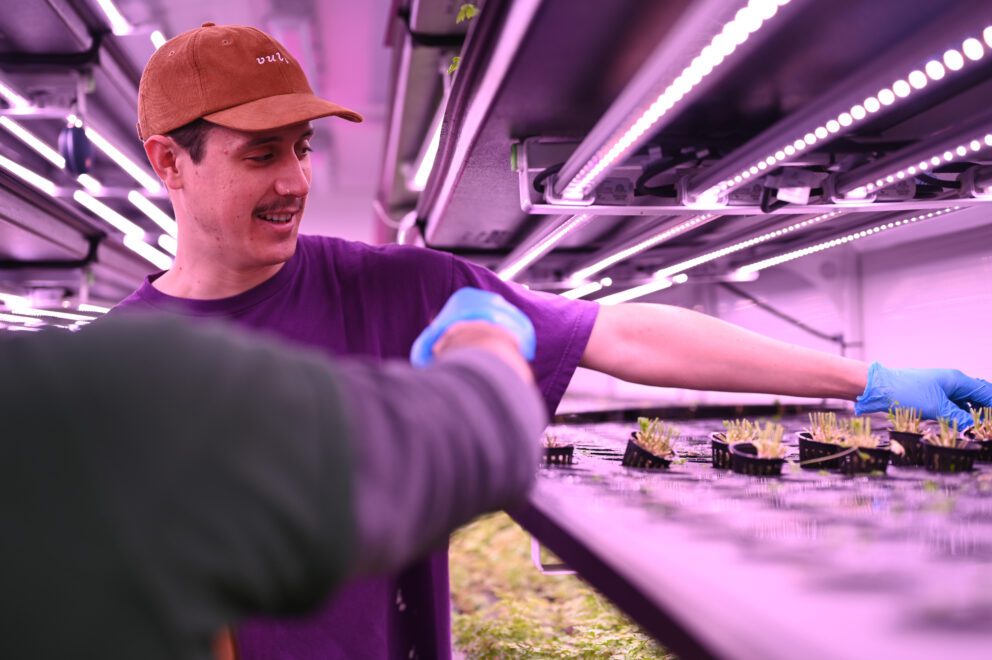
Senior hydroponics and donated food specialist Mick O’Donnell harvests herbs in the hydroponics unit.
The Food Depository’s hydroponics program demonstrates how innovation and volunteer dedication come together to support the mission to end hunger, ensuring nutritious, flavorful meals reach neighbors across Chicago and Cook County.
Share This Post