


Last year was one of the hardest of Celina Garcia's life. Her husband had surgery and spent months unable to work. With two adult daughters and a newborn grandson at home, Celina, 54, a patient at Infant Welfare Society (IWS) Family Health in Logan Square for 20 years, wasn't sure how she was going to keep food on the table.
Then she learned about IWS’s food pantry, a partner of the Greater Chicago Food Depository. "I'm so grateful for this food," she said. "It really helped us when we needed it most. It was a blessing for my family." During the hardest stretch, Garcia visited the pantry every week.
She filled her bags with fresh vegetables, fruit and pantry staples — all right inside the clinic where her family had received care for two decades.
"I'm so glad they have a resource like this for people who need it."
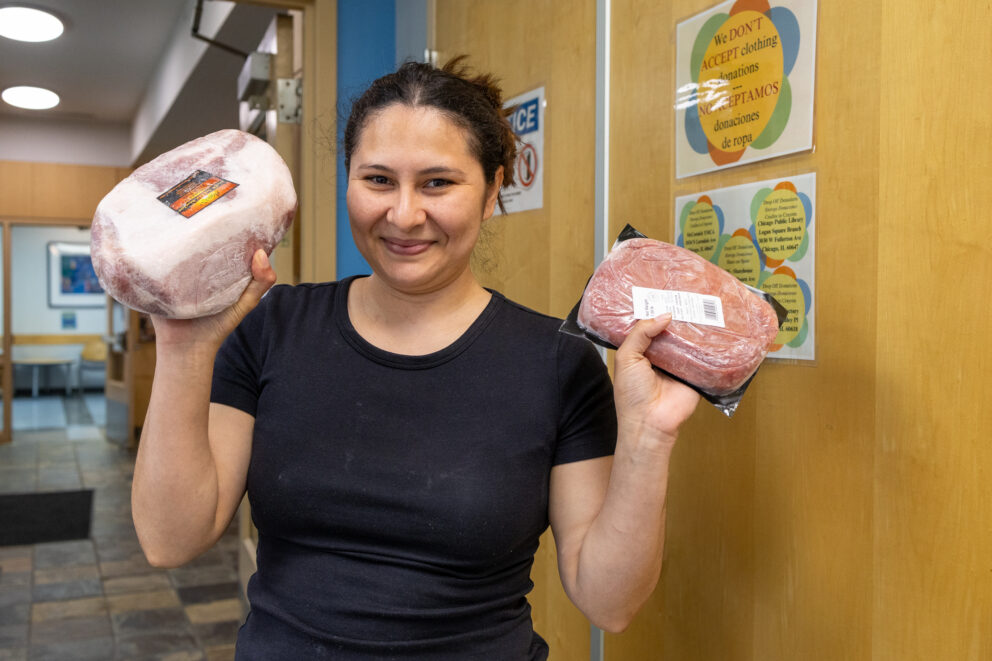
Celina Garcia holds up a meat selection from the IWS Family Health pantry in Logan Square, where her son has been a patient for 20 years.(Photos by Nancy Stone for the Greater Chicago Food Depository.)
Her story isn't unusual. For many patients at clinics across Chicago, health crises and food insecurity arrive together — each making the other harder to manage.
Food access as part of health care
The Food Depository partners with seven health care sites across Chicago — clinics, community health centers and hospital systems that have integrated food assistance directly into patient care. Last year, an average of more than 1,900 households visited these pantries each month, connecting families to nutritious food where they already receive health services.
The pantries are open to any patient at the clinic — no separate referral needed, and no appointment required. Many patients stop in the same day as a medical visit; others go on their own time. When food insecurity and chronic illness arrive together, addressing only one of them isn't enough.
Starting with a question
The pantry at IWS didn't start as a program. It started as a question the clinic kept asking itself: What do our patients need beyond clinical care?

IWS Family Health has served the surrounding community for decades.
They used a social determinants of health screener to find out. The results confirmed what staff suspected — food insecurity was widespread, and it was affecting their health. "There's always the thought of, how can we be there for our community? What is the need?" said Wendy Marines, the external relations coordinator who manages the pantry. Those questions led to action.
In 2023, IWS set up a dry goods pantry in the clinic basement, stocked with staples from the Food Depository. Patients kept coming back and need kept growing, so the clinic moved the pantry to the main floor and added fresh produce. Today it serves about 100 patients and parents or guardians of patients each week. "People need enough food," Marines said. "People need healthy food."
What doctors are seeing
Dr. Elva Julie Quinones has been a pediatrician at IWS since 2007. She's watched the relationship between food access and health play out across nearly two decades of patient care.
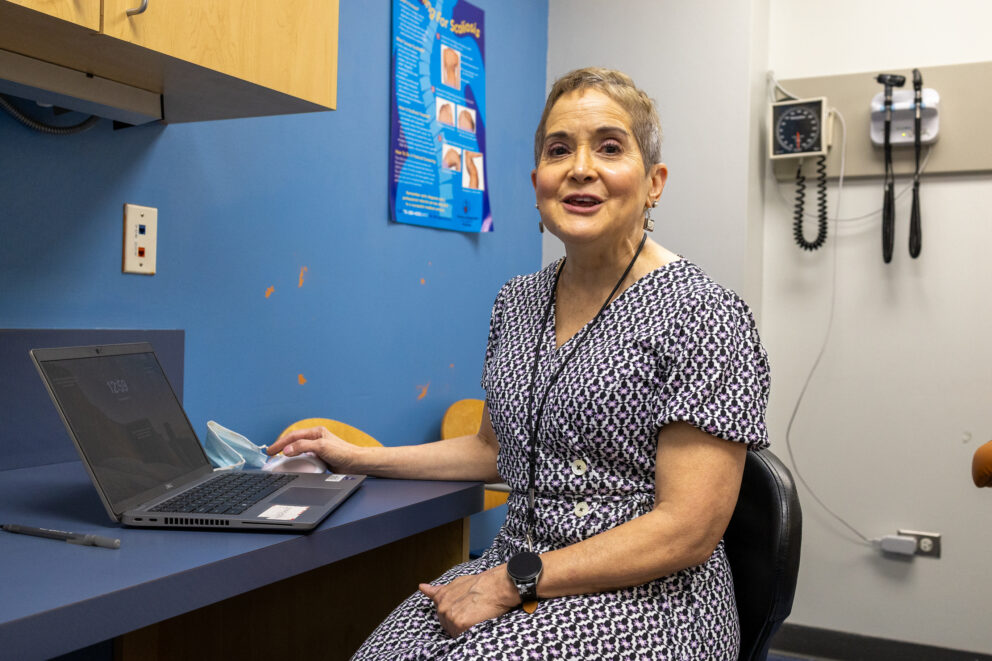
"We have a population with high rates of diabetes, pre-diabetes, hypertension, fatty liver disease and obesity," she said. "Many of these conditions are preventable through good nutrition. I'm a firm believer that you are what you eat."
She's already seen the pantry make a difference: some patients who visit regularly have seen measurable improvements in their health.
The people it serves
Juana Bahena, 50, has been visiting IWS for nearly a decade, first bringing her son when he was 11, now sometimes visiting on her own. She visits other food pantries, but when she discovered the one at IWS, she made it her primary stop: it's close to home, and she can visit when her son has an appointment.
"The food helps me a lot, especially the fresh produce. It's so expensive in the store,” she said. “Here I can get vegetables, eggs, milk, lentils, rice — the basics."
A model taking root across Chicago
At UChicago Medicine, Feed1st has been a resource for families in crisis since 2010, when Reverend Karen Hutt noticed a problem that wasn't being addressed: families were going hungry while their children were hospitalized. Parents spent long days at their child's bedside, unable to leave and with no way to access food. She opened the first food access site in a hospital chapel closet to fill that gap.

A patient receives free food from a food access site in the University of Chicago's Oncology Center.
Today, Feed1st operates 11 sites across four buildings, distributing 6,000 pounds of food per month to more than 3,000 individuals — patients, family members and staff, with each allowed to take as much as they need.
Claire Fendrick, Feed1st's program management specialist, describes patients and families who arrive for one kind of help and find another waiting. "When you're at the hospital for your child, you need so much energy just to be there for them," she said.
"Having food available relieves a burden at a time when people are already carrying so much."
Feed1st has seen visits climb at least 10 percent over the past year, with this past March the busiest month on record — a spike Fendrick attributes to economic pressure from rising rent, grocery and gas prices, compounded by anxiety about cuts to SNAP and Medicaid.
A growing challenge
Demand is growing, and federal policy is adding to the strain. H.R. 1, the so-called One Big Beautiful Bill, signed in July 2025, is projected to leave as many as 400,000 Illinoisans without Medicaid coverage by 2028.
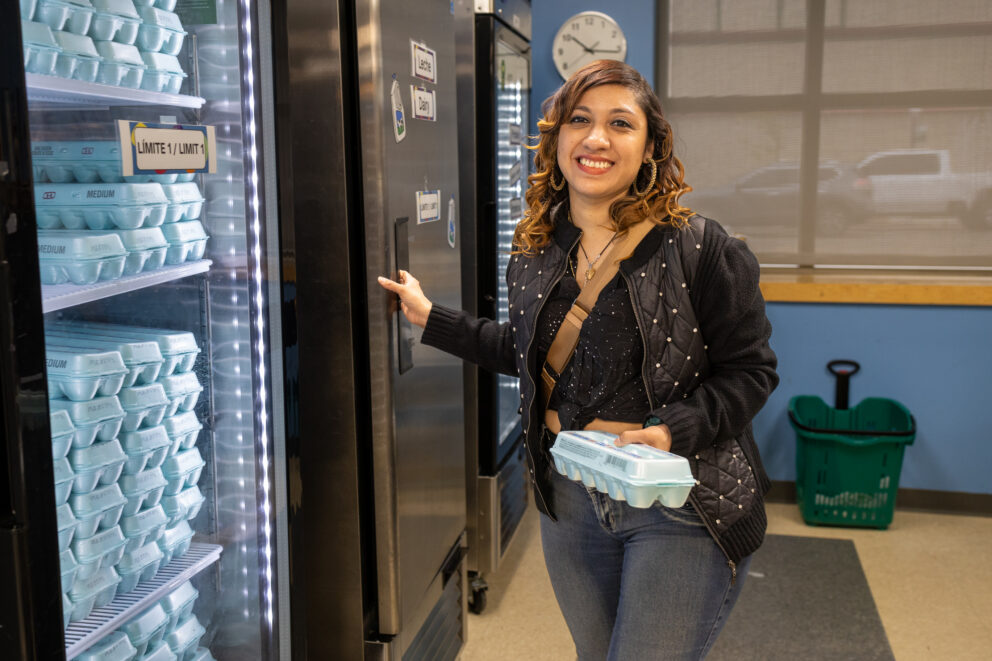
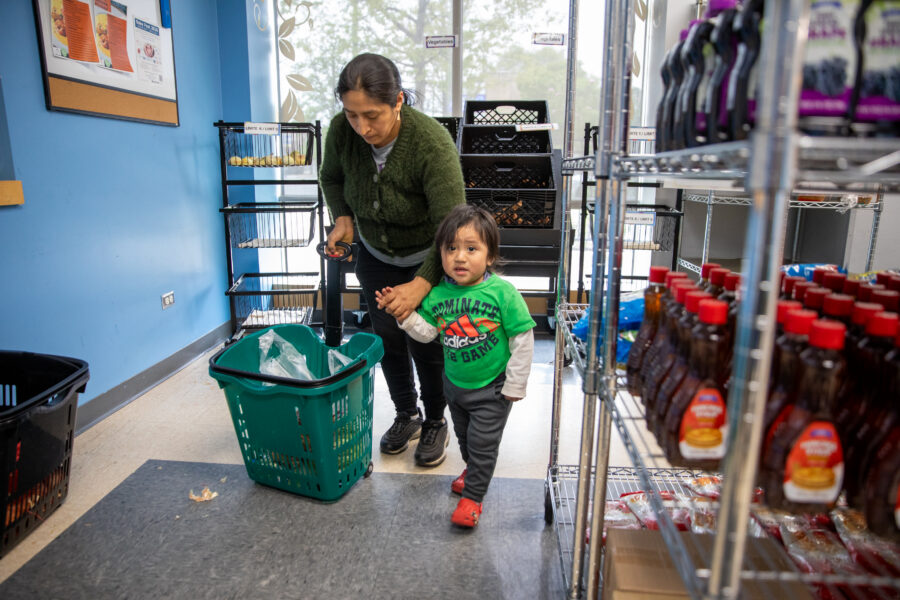
Stephanie Lopez picks out some eggs to take home from the IWS pantry.
Garcia doesn't come to the pantry every week anymore. Her husband recovered, her daughters are working, things have stabilized. But she knows the pantry is there. And she knows what it meant when it wasn't just a convenience, but a lifeline.
"I'm so grateful," she said of the pantry. "For me and for all the other people who need it."
Share This Post