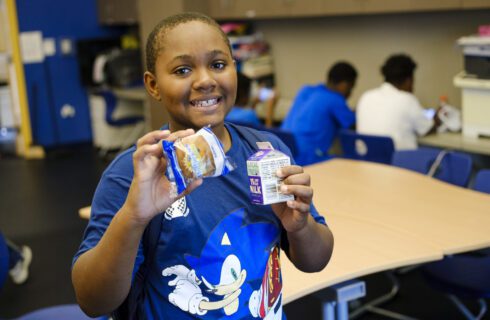


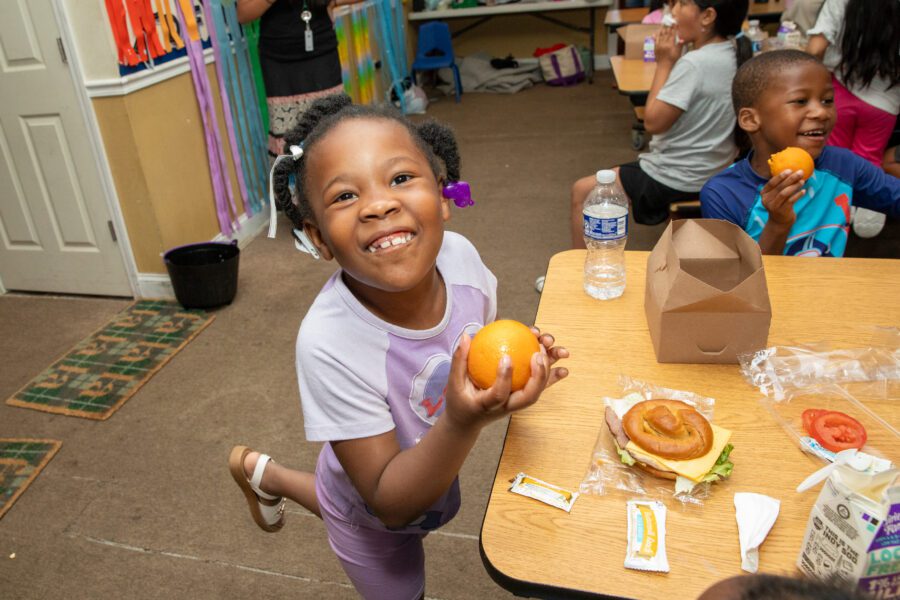
On a warm afternoon at Heirs of the Promise summer camp in Chicago's Austin neighborhood, kids line up for sandwiches, blood oranges and cartons of milk. Staff hand out lunch boxes quickly as the room buzzes with the energy of a summer day.
For the roughly 50 children who attend the camp each day, breakfast and lunch are a daily constant — meals provided in partnership with the Greater Chicago Food Depository. Nine-year-old Malaysia, who has attended the program for five years, sums up what keeps her coming back: "I like this camp. It's a really great place for kids."
The program, called Super Explorers, is part day camp, part community anchor and, for many families, a place where children can count on a nutritious meal every day. Between meals, campers participate in games, arts and crafts, field trips and learning activities — creating a full day of learning, connection and fun.
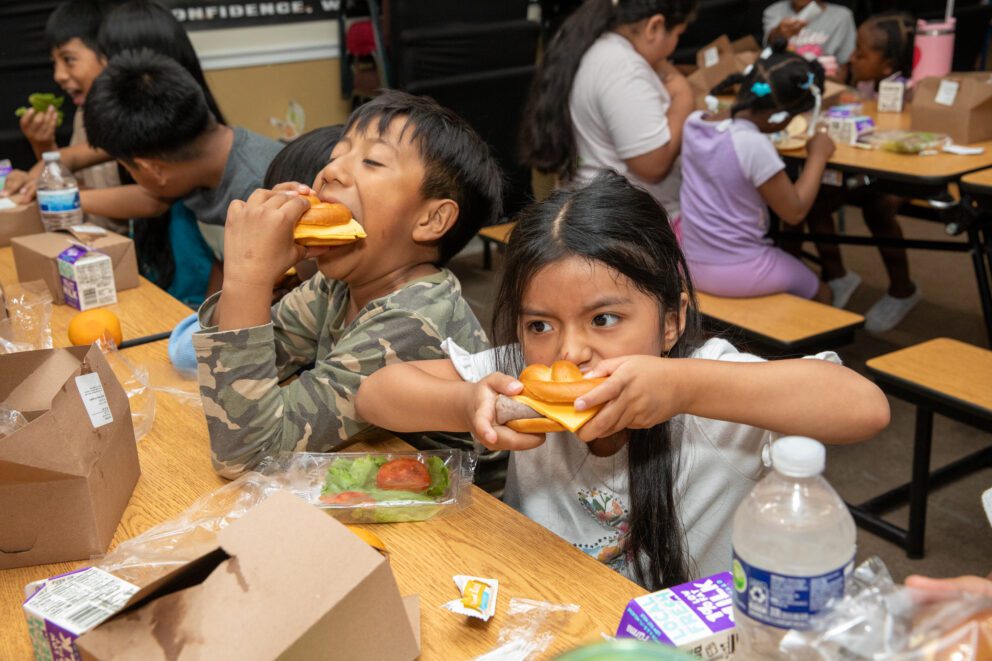
Super Explorers summer camp participants enjoy their roast beef sandwiches. (Photos by Nancy Stone for the Greater Chicago Food Depository.)
Heirs of the Promise's Super Explorers is one of 115 programs across Cook County that the Food Depository is supplying with meals this summer, part of our more than 20-year summer feeding effort.
Why summer feeding matters
During the school year, many children rely on school meals for breakfast and lunch, which can provide up to half of a child's daily calories. When summer break begins, families must provide those meals themselves — a challenge for households already managing tight budgets. Children who go without enough nutrition over the summer are more likely to face long-term health consequences and to return to school behind academically.
The meals kids eat at Heirs of the Promise provide more than nourishment. They create the foundation that allows children to participate fully in the program, explore new activities and enjoy their summer.
A partner when it mattered most
Chrystal Kyles has seen the importance of that support firsthand. She is the founder and executive director of the summer camp, after-school program and school, Hope Excel Reaching the World Academy, connected to Heirs of the Promise.
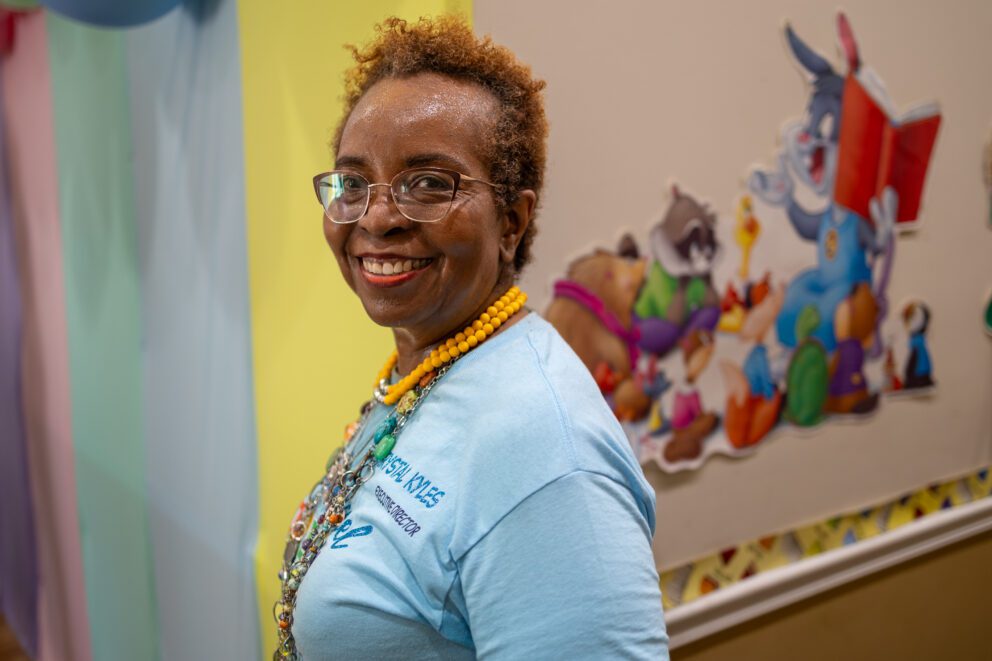
Chrystal Kyles has been serving the Austin community with Heirs of the Promise for over 13 years.
For much of the program's history, meals came through a government food grant. When that funding was cut in September 2025, Kyles and her team had to find another way to feed the children in their care.
They continued buying groceries and preparing meals themselves until January, when the Food Depository stepped in as a partner. The Food Depository provides fresh fruits, vegetables, meat and milk — foods that are not always affordable or easily accessible for families in the community.
"Sometimes the kids get meat here and they might not get that at home," Kyles said. "So at least we know they have a full, balanced meal at minimum twice a day."
Access to affordable, nutritious food remains a challenge for many families in the Austin community. "The nearest grocery store, you have to get a bus to get there," Kyles said. "Around here, there are only corner stores that don't have the healthy foods people need."
Where food, learning and community grow
The meals are a central part of what makes Heirs of the Promise special, but the program's work does not stop at the table. Through its garden, children get a hands-on opportunity to learn where food comes from while building a deeper appreciation for fresh, healthy foods.
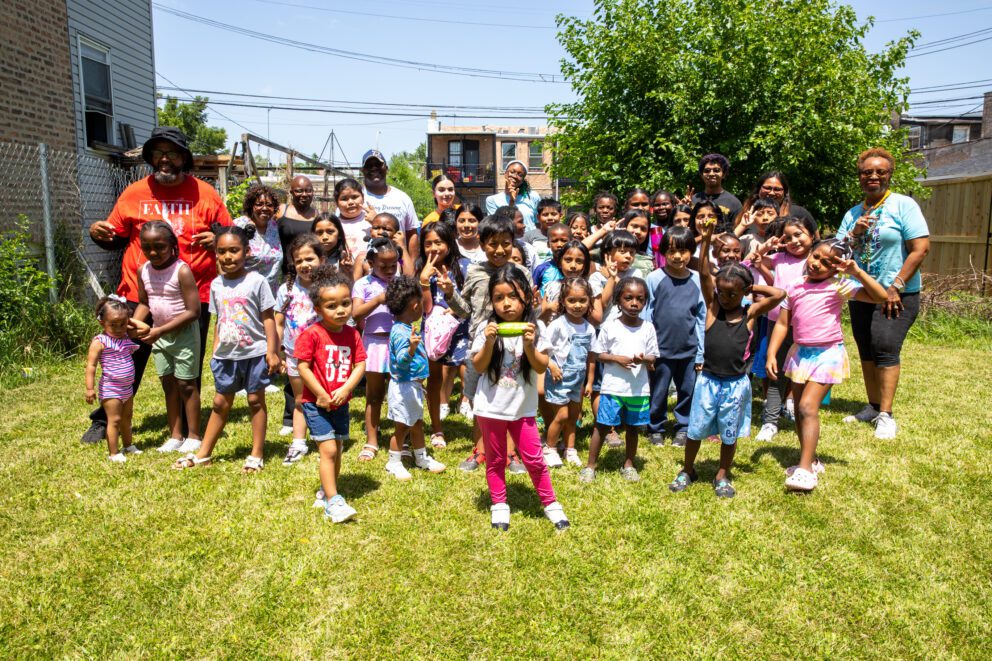
The children love visiting the garden whenever they get the opportunity.
Pastor Clarence Smith, director of strategic growth, leads the garden. He holds a degree in sustainable horticulture and sees the garden as a classroom — a place where children can learn that food doesn't just come from a store; it starts in the soil.
"Two years ago a child asked me where a carrot comes from," Smith said. "I told him it comes from the ground, and he said, 'No, it comes from the grocery store.'"
For Smith, teaching children how to grow their own food is about more than gardening. "The kids need to know where healthy and nutritious food comes from," he said. "I love to teach kids how to work with their hands and the soil, because it gives them peace."
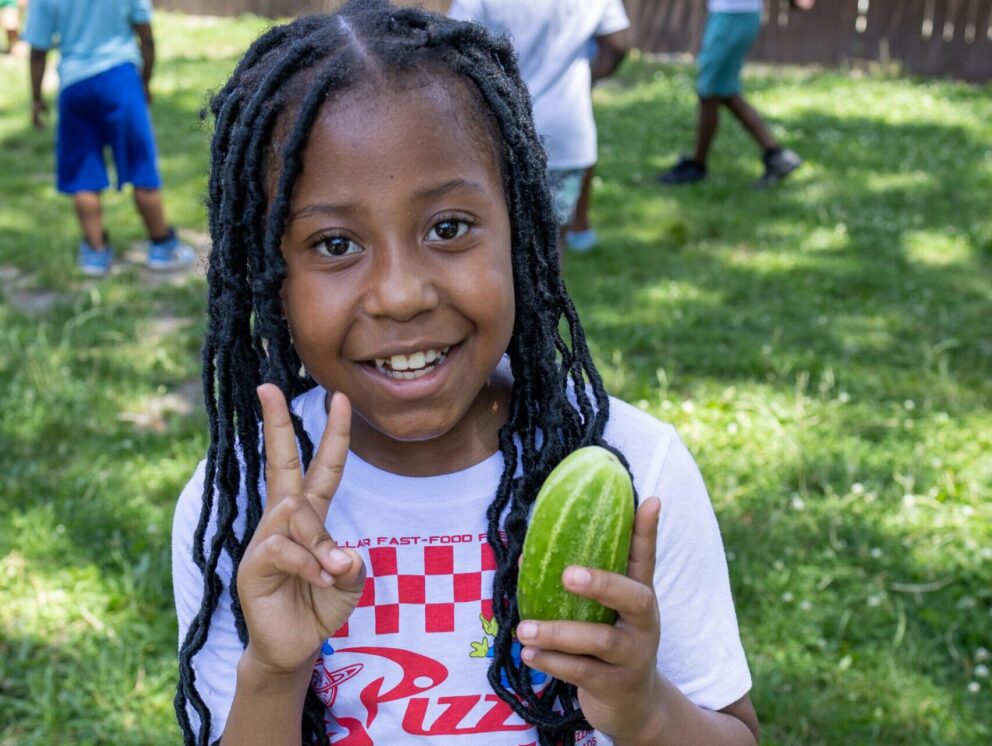
Malaysia, 9, takes home a cucumber from the garden.
This summer, Malaysia already has a favorite crop: the spicy pepper. She looks forward to what shows up on her lunch tray, too. "I like when they give us tomatoes and I like when they give us fruit," she said.
Ryan Harrison, 9, in his second year at the program, loves the strawberries and watermelon the garden produces, and lit up over today's lunch — a roast beef sandwich on a pretzel bun.
For Jeomaera Guanopuomiza, 8, the garden also provides a connection to home. "I love the sea, plants and nature, because I grew up in Ecuador where we lived in nature, so I love being in the garden," she said.
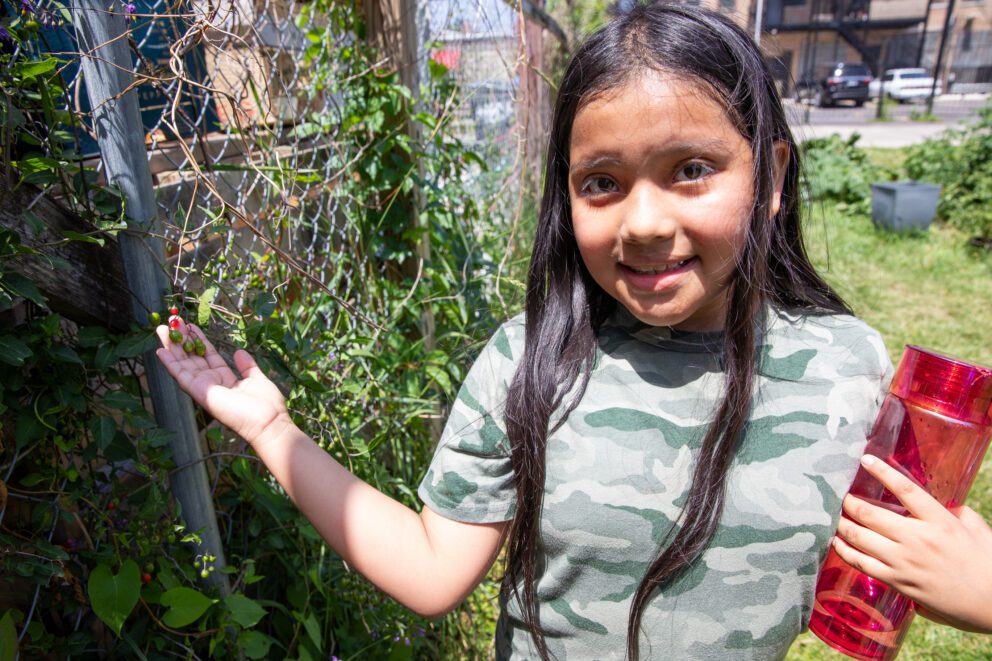
Jeomaera, 8, poses with tomatoes, which she can't wait to see grow to full size.
Each Friday, the garden's harvest goes out on a table for any child to take home. The harvest offers families another source of fresh produce while reinforcing the lessons children learn throughout the program: healthy food can be grown, shared and enjoyed.
More than a meal
For Smith, the Food Depository partnership helps remove one barrier standing between children and the opportunities Heirs of the Promise provides.
"The food we get from the Food Depository has made a major difference," he said. "The kids get food as soon as they walk in the door, and they're able to focus on the program because they're not hungry. You can't focus if you're hungry."
For Kyles, the mission comes back to something simple. "We teach them basic lessons — how to treat each other, how to be respectful and how to eat well," she said.
Between the garden, the classroom and everything else Heirs of the Promise builds into a summer day, it's the meals that make the rest possible. As Kyles put it, kids can't focus, can't grow and can't feel safe on an empty stomach. With that need covered, Heirs of the Promise is free to do what it does best: give roughly 50 kids a place to belong.
Share This Post