


On most days, student Mo’hogney Mitchell is on campus at Kennedy-King College from morning to evening. Between classes, a long commute and meetings as president of the Student Government Association (SGA), she rarely has time to leave campus or the extra money to buy meals throughout the day – for herself or to take home to her grandmother, who raised her and who she still lives with.
Like many City Colleges of Chicago students, Mitchell relies on Kennedy- King’s on-campus Statesman Market, a free food pantry where students can pick up groceries and snacks without leaving campus. Supported through a partnership between the Greater Chicago Food Depository and City Colleges of Chicago, the pantry helps students meet their basic food needs so they can stay focused on their education.
“As someone who is here on campus from 8 to 5 almost every day, it means I won’t have to starve myself to get through my commute, classes, SGA meetings and more,” said Mitchell, a psychology student. “It means I can continue to bring home meals for myself and my grandma.”
Food insecurity on campus
For students like Mitchell, reliable access to food is not just about convenience. It is about staying in school, staying focused and staying on a path toward a stable future. Food insecurity is an increasing barrier to these goals.
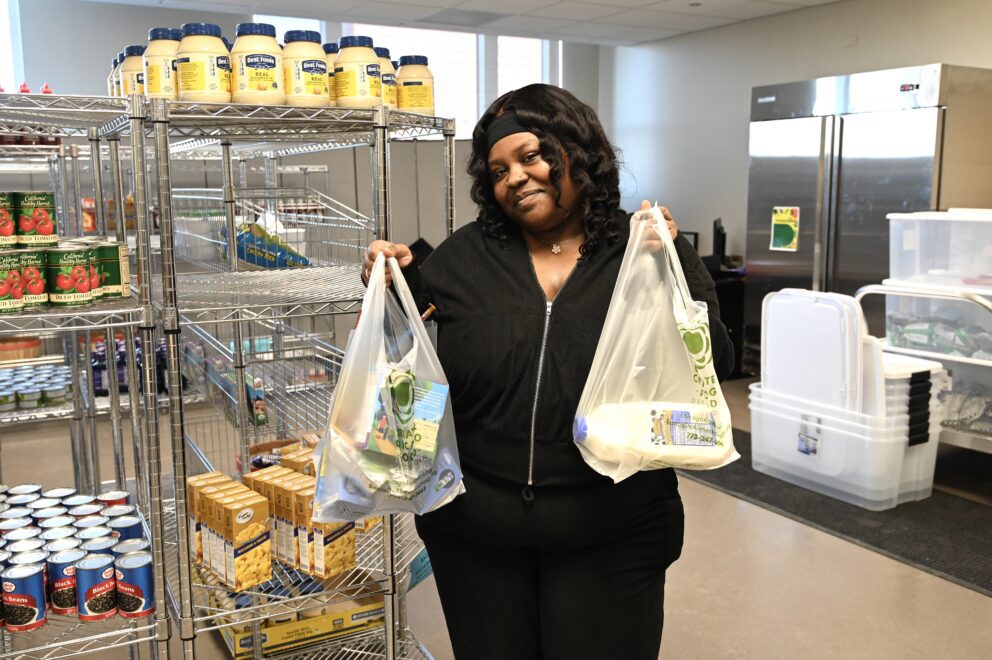
Before the Statesman Market opened, student Mo’hogney Mitchell stopped by the Healthy Student Market to pick up groceries after class. The former market has since closed.
According to a 2024 City Colleges of Chicago student basic-needs survey, 50 percent of students identified as food insecure. City Colleges serves a diverse student population that includes working adults, parents and students supporting extended families. Many students are balancing school with jobs, caregiving responsibilities and rising living costs, making them particularly vulnerable to food insecurity while pursuing higher education.
National research has shown that food insecurity is a growing problem and can undermine academic success. Students who lack reliable access to food are more likely to miss class, struggle academically or drop out before completing a degree or credential.
Expanding a strong partnership
Those realities inspired the expansion of a long-standing collaboration between City Colleges of Chicago and the Food Depository. Announced at Kennedy-King College in late 2025, Food Security for Life is a multi-layered initiative designed to ensure students and their families have consistent access to nutritious food while they focus on education and career pathways that lead to thriving wages.
The initiative expands food access across City Colleges campuses through enhanced on-campus markets stocked with groceries, nutritionally balanced frozen meals to take home and free snack stations available throughout campus. It also strengthens connections to public benefits such as the Supplemental Nutrition Assistance Program (SNAP) and Medicaid, recognizing that many eligible students are not currently enrolled in available assistance programs. Food Security For Life also includes joint advocacy efforts to help ensure that future legislation addresses the needs of college students.
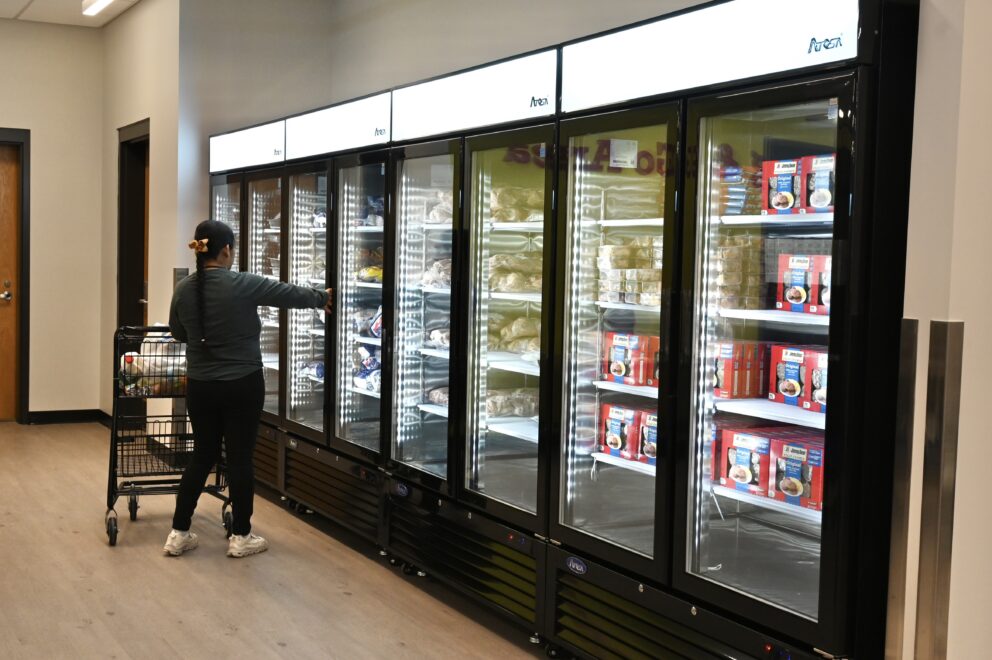
The new Statesman Market opened this winter at Kennedy-King College in Englewood.
“Our students come to City Colleges with big dreams, and being hungry should never stand in the way of their education,” said City Colleges of Chicago Chancellor Juan Salgado.
“Food Security for Life is about supporting the whole student. By removing barriers, we are helping our students stay enrolled and focused on their education. This program will build brighter futures for our students, their families and for all of Chicago.”
The partnership also aligns closely with the Food Depository’s strategic focus on addressing the root causes of hunger by improving access to thriving wages. In addition to food access, Food Security for Life includes paid apprenticeships at the Food Depository, offering City Colleges students hands-on experience, living-wage opportunities and exposure to career pathways while they complete their studies.
The food and services through Food Security for Life are offered at no cost to City Colleges students, thanks to Knight Impact Partners, Cummings Family Fund and other generous donors.
Making a way forward
At Kennedy-King College, the expanded partnership has transformed what food access looks like on campus. Dr. Alison Rose, vice president and on-campus liaison at Kennedy-King, oversees several departments, including the campus market. She said the evolution of the pantry reflects both growing student need and the critical role of the Food Depository.
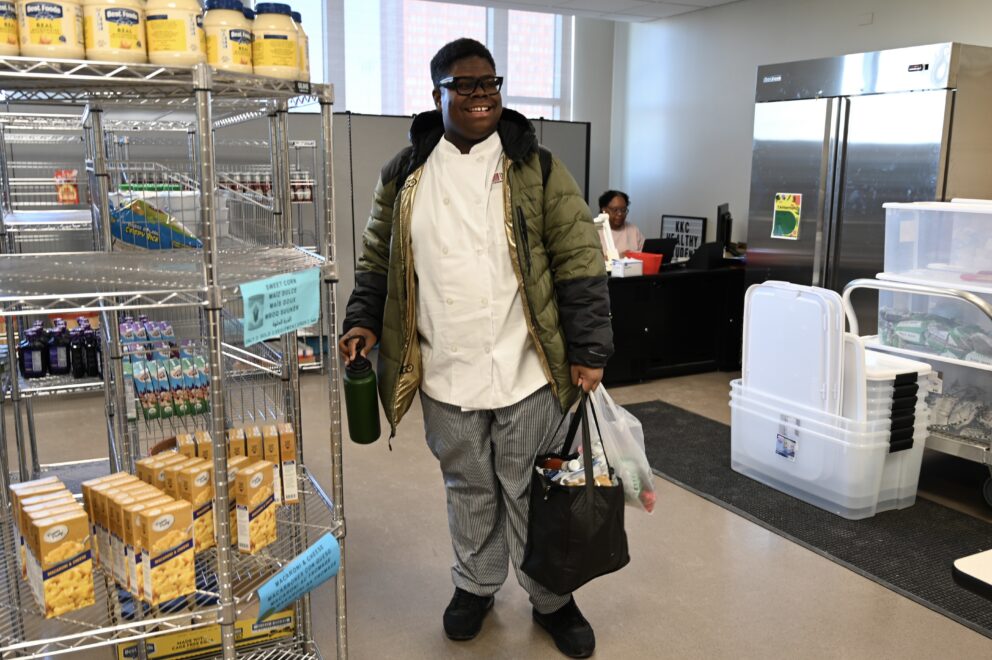
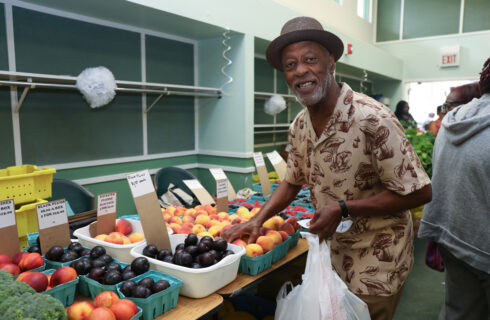
Culinary student James shops for food at the former Healthy Student Market space on the Kennedy-King College campus.
During the COVID-19 pandemic, the campus market shut down entirely as student presence on campus dropped dramatically. When it reopened, the pantry had limited space and no refrigeration, limiting the amount and type of food they could provide to students. “We were doing what we could, but it was limited,” Rose said. “We knew students needed more consistent access and a wider variety of options.”
With the opening of the newly renovated Statesman Market, Kennedy-King is now able to offer expanded hours and a wider range of food, and they are seeing the demand increase. It now operates multiple days a week with plans to hire student workers and serve students 35 to 40 hours a week, reflecting the goal of making food access part of the daily rhythm of campus life.
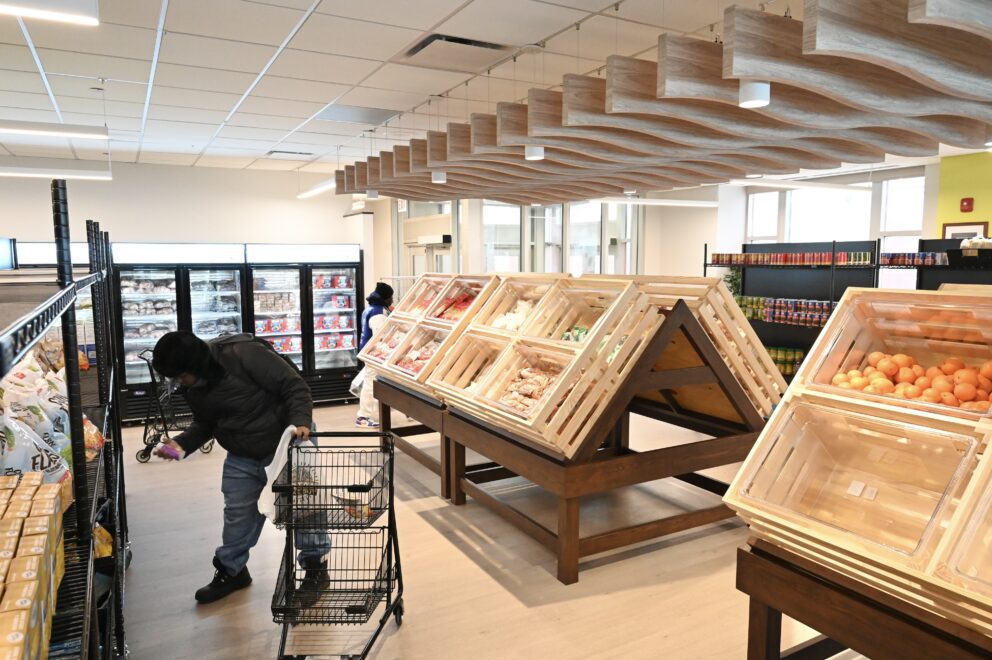
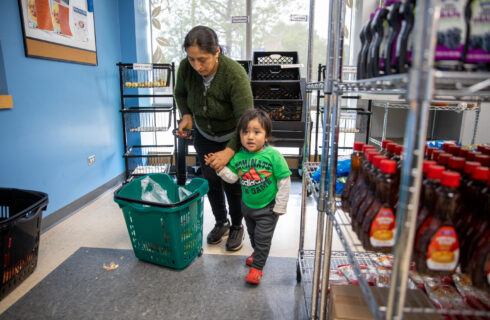
Students shop for groceries at the new Statesman Market at Kennedy-King College.
“I have seen this work and this partnership really make a way for people,” Rose said.
“When you see the students walking out with their groceries, and you see how happy and how proud they are, you know it’s making an impact. I’m very thankful for this partnership and for all the people that are making it happen.”
For Mitchell, the impact of the partnership is immediate and personal. Reliable access to food means she can stay engaged on campus, support her family and continue moving toward graduation. “It means I don’t have to choose between learning and eating,” she said.
Share This Post