


Nearly one year after H.R. 1 (also called the “One Big Beautiful Bill”) was signed into law, the federal government’s intentional dismantling of the Supplemental Nutrition Assistance Program (SNAP) continues.
On June 24, 2026, the United States Department of Agriculture (USDA) issued a memo that previews how much state governments will need to pay in the years ahead to maintain SNAP benefits for their residents who face hunger.
The Greater Chicago Food Depository, alongside other Feeding America affiliated food banks and anti-hunger advocates nationwide, has opposed this cost shifting measure since it was first introduced. Up until this point, SNAP benefits have been 100% federally funded. The new law requires states to pay as much as 15% of benefit expenses annually. This disastrous new policy breaks a promise the federal government had kept since the Food Stamp Act of 1964.
If Congress fails to act and change policy before these cost shifts take effect, states will need to shoulder hundreds of millions of dollars annually or their residents will lose SNAP entirely.
The amount each state will be required to pay, and when they are required to pay, is based on a measure called payment error rate. Payment error rates measure benefit underpayments and overpayments states make while administering SNAP. It is not a measure of program efficiency or integrity. Most errors involve eligible households receiving slightly too little or too much assistance because of changing life circumstances or administrative mistakes.
Based on USDA fiscal year 2025 calculations, 36 U.S. states and territories are expected to cover between 5 and 15% of SNAP benefit costs beginning October 1, 2027 unless they improve their payment error rate in fiscal year 2026. High population states like Florida, New York, Texas and California are expected to pay anywhere between $725 million and $1.9 billion each to keep SNAP active in their states.
Illinois is one of seven states and territories whose cost shift will begin in 2028 because the payment error rate is higher than 13.33%. Based on historic numbers, Illinois could have to pay as much as $700 million to sustain SNAP beginning in October 2028.
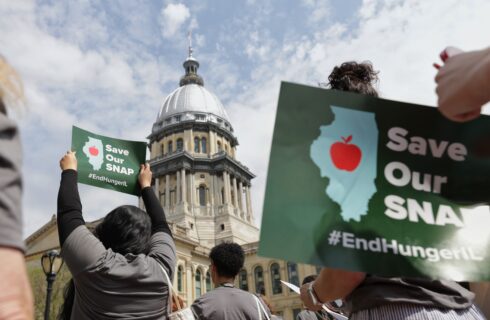
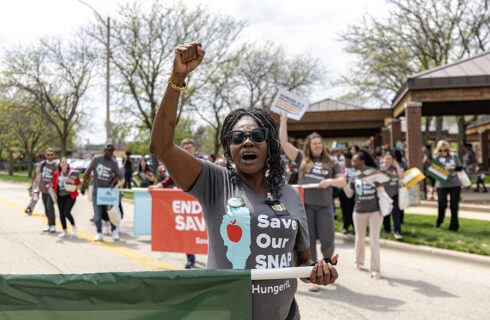
As we advocate for Congress to reverse this disastrous policy, the Food Depository will work with Illinois government and the Save Our SNAP coalition to ensure SNAP remains available for Illinoisans in October 2028 and beyond. The Governor’s office and Illinois Department of Human Services (IDHS) are already implementing strategies to reduce the payment error rate. We applaud the State of Illinois for its humane approach to implementing federally required changes to SNAP so far. We look forward to our continued partnership.
As a founding member of the Save Our SNAP coalition, we will advocate tirelessly for Illinois to develop a plan that keeps SNAP working for our neighbors. State policymakers must prepare for future Illinois budgets that contain hundreds of millions of dollars to cover a federally mandated cost share.
While this crisis is entirely the work of the federal government, we cannot let Illinois lose SNAP. Approximately 1.7 million Illinoisans rely on SNAP to afford groceries. The end of SNAP would create the worst hunger crisis in state history, push the charitable food system beyond the brink and devastate health outcomes. It would be a crushing blow for grocery retailers, jobs, food prices and the entire state economy.
The Food Depository, our tireless advocates and the Save Our SNAP coalition will do everything in our power to reverse the harm of this disastrous federal policy. To learn more and join our advocacy efforts, visit chicagosfoodbank.org/advocacy
Share This Post