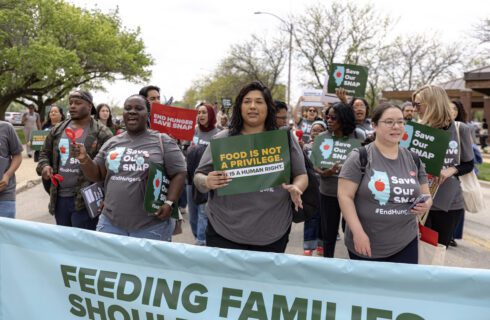



Ever since the budget reconciliation bill (H.R. 1) was signed into law last summer, the Food Depository has been working to mitigate its harm to our neighbors experiencing food insecurity.
The bill requires Supplemental Nutrition Assistance Program (SNAP) participants between the ages of 18 and 64 to work or volunteer at least 80 hours per month, unless they have dependents under the age of 14 or another qualifying exemption. While work requirements might sound reasonable, they ignore the reality that most SNAP participants who can work do work. The requirement to report monthly hours creates another obstacle for people to keep their benefits.
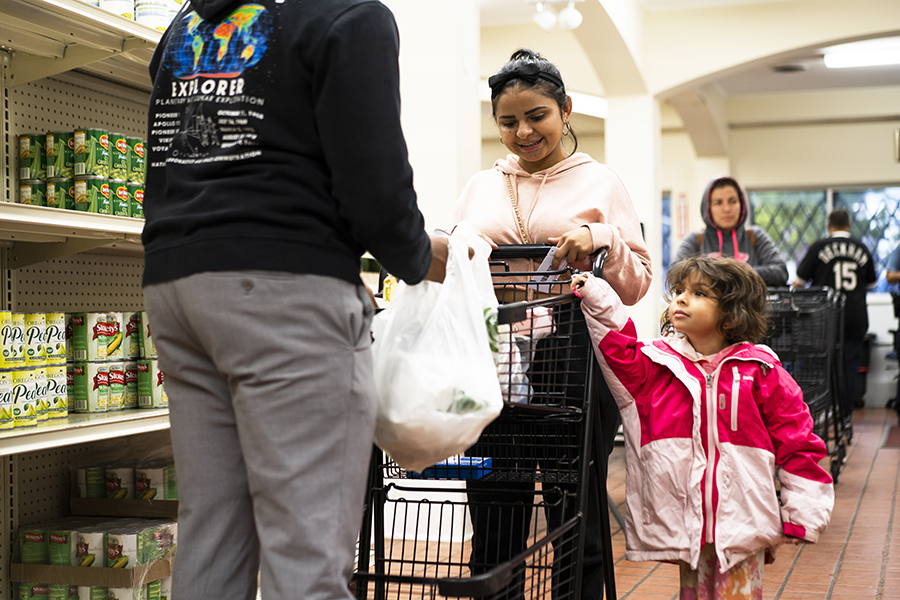
The State initially estimated work reporting requirements could cause as many as 450,000 SNAP participants in Illinois to lose their benefits, while cost sharing added by H.R. 1 could even shutter the program throughout the state. Disruptions to SNAP are devastating to our neighbors and create a need that food banks like ours were not designed to meet. To put it in perspective, for every meal we provide, SNAP provides nine.
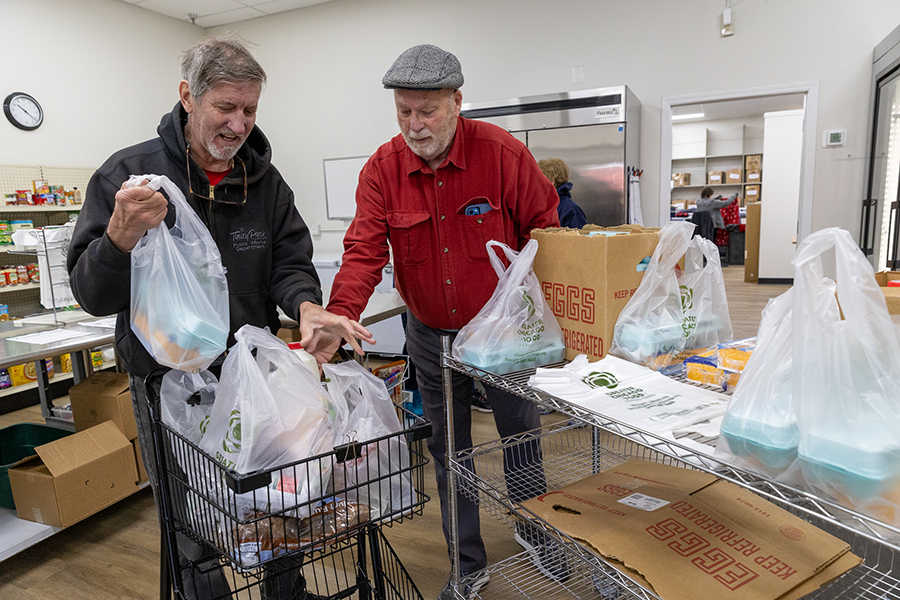
A volunteer at Together We Cope pantry helps a guest pack his groceries. Photo by Nancy Stone for the Food Depository.
The Food Depository is committed to saving SNAP in Illinois – for our neighbors who need it now and for anyone who needs it in the future. This is why we have developed and are executing a comprehensive, multi-year strategy to mitigate the negative effects of H.R. 1 in our state. This work supports our strategic goal of improving participation in the safety net.
The first step is a public awareness campaign so SNAP participants can understand the new eligibility and work-reporting requirements. We want to be sure every person on SNAP knows if the new rules affect them and what steps they need to take to protect their benefits.
Our teams have been spreading the word at community events, online, through the news media and across networks of partners. Thanks in part to our awareness and advocacy efforts, the State has lowered its estimate of people who could lose their benefits to 220,000.
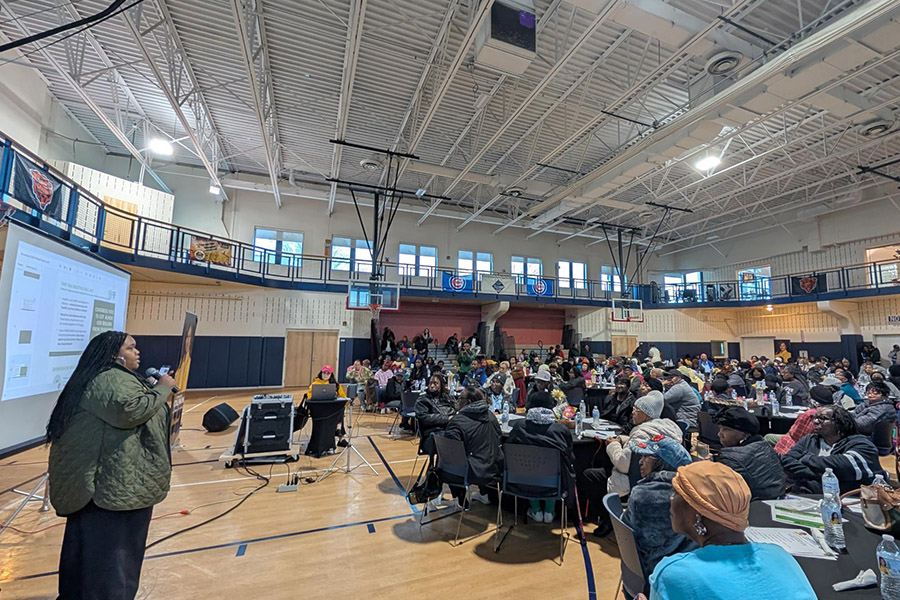
Tyler Stratton, director of community engagement at the Food Depository, shares about SNAP changes at a 16th Ward monthly
community meeting in Englewood.
To reach additional SNAP participants, we have been growing our community of SNAP advocates. Armed with our training and outreach toolkits, these advocates have done everything from posting about SNAP changes on social media to joining us on lobby trips to Springfield. We’re well on our way to reaching our goal of adding 10,000 new advocates this fiscal year to help raise awareness and rally support for SNAP.
To preserve the program in Illinois, the Food Depository is working with the State to help reduce its payment error rate. Starting in October, some SNAP benefit costs will shift from the federal government to the states. The amount each state will pay is based on the rate of benefit over- and under-payments, also known as the “payment error rate.” Illinois’ current rate requires the State to cover $700 million a year – and if unable to pay the full amount, SNAP will likely be eliminated in the state altogether.
To avoid this catastrophic result, the Food Depository is working closely with the Governor’s office and the Illinois Department of Human Services – offering our analysis and expertise in the food space. We will continue collaborating to pursue solutions that will lower the payment error rate.
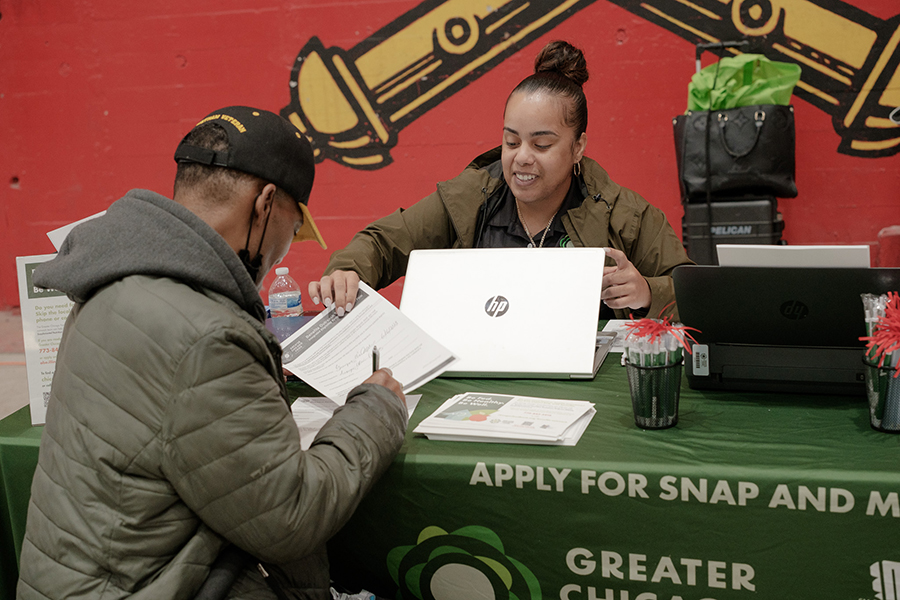
A Food Depository benefits enrollment specialist helps a veteran with a SNAP enrollment form. Photo by Lou Foglia for the Food Depository.
As neighbors navigate new forms for work-reporting requirements, we are increasing the number of SNAP enrollers to help neighbors provide the required information to both get and stay on the program. The Food Depository is also adding a case manager and hosting trainings for enrollers across Illinois in partnership with the State.
Finally, the Food Depository is working to support those who will get dropped from SNAP because they won’t be able to find a job in time or won’t turn in the right documentation. Our policy team is supporting a bill for Illinois to create its own benefit program for people who lose access to SNAP and we’re exploring a privately funded direct assistance program for neighbors.
None of this work would be possible without the support of our volunteers, donors and advocates. As we navigate the many uncertainties about SNAP, one thing is clear: We cannot preserve this vital program without the continued help of a robust community of anti-hunger champions.
Learn more and take action at chicagosfoodbank.org/advocate.
Share This Post